
Description
Asclepias curassavica | Bloodflower Milkweed
Bloodflower Milkweed, also commonly known as Tropical Milkweed, Scarlet Milkweed, Mexican Butterfly Weed, Redhead, Silkweed, Cotton Bush, Swallow-worm and Wild Ipecacuanha, is a tender evergreen perennial that’s often grown as an annual. It is thought to be native to the American tropics, but has escaped cultivation and naturalized worldwide in many tropical and subtropical areas. It can spread quickly in disturbed areas and is frequently found naturalized in waste places, roadsides, or fields.
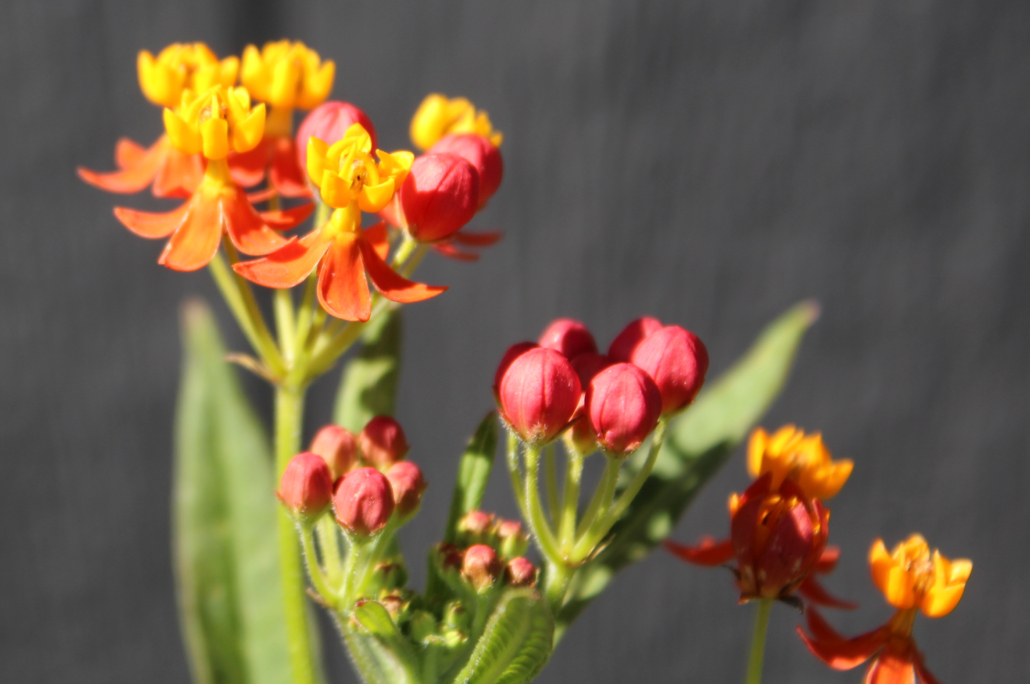
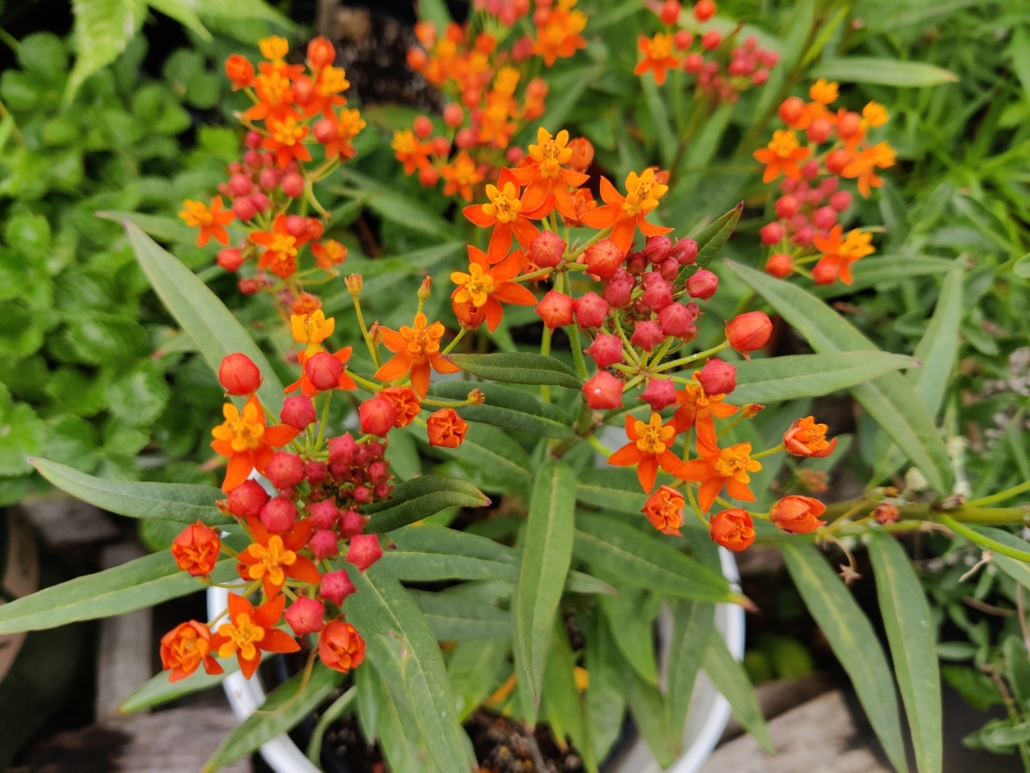
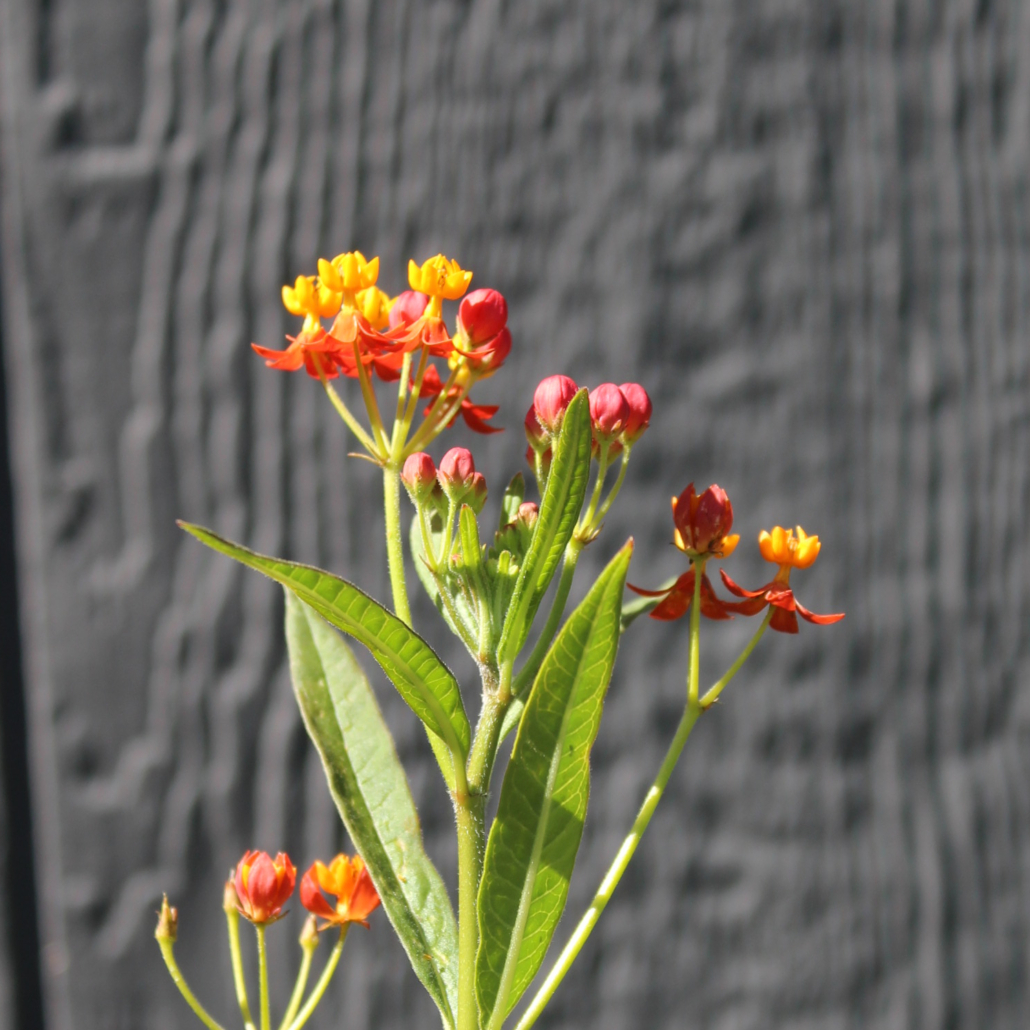
As a perennial it grows into a 2-3 ft tall sub-shrub with upright stems clad with pointed, opposite, lanceolate leaves (to 6” long). Leaves are medium green and sometimes have white midribs. The bright red-orange and yellow flowers appear in axillary clusters (cymes) spring through summer, having a longer blooming period than most other milkweeds. The flowers are followed by long, narrow seed pods which as a couple of its common names suggest, it splits open when ripe releasing silky tailed seeds for dispersal by wind. The stems and leaves exude a milky sap when cut or bruised, so avoid.
Plant Asclepias curassavica in full sun in moist, fertile, well-drained soil. Looks great in flower beds, borders, cottage gardens, meadows and butterfly gardens. Also makes a good cut flower and the dried seed pods are attractive in arrangements, too.
Bloodflower Milkweed is great for attracting hummingbirds, butterflies, bees, and a variety of other pollinators. Monarch butterflies lay eggs on this plant and the resulting larvae (caterpillars) use the plant leaves as a food source.
Seeds germinate with heat humidity and light.
Type: Perennial
Sun exposure: Full sun
Mature height: 2-3 ft
Mature width: 2-3 ft
Hardiness zones: 9-11


