
Description
Asclepias incarnata | Marsh Milkweed
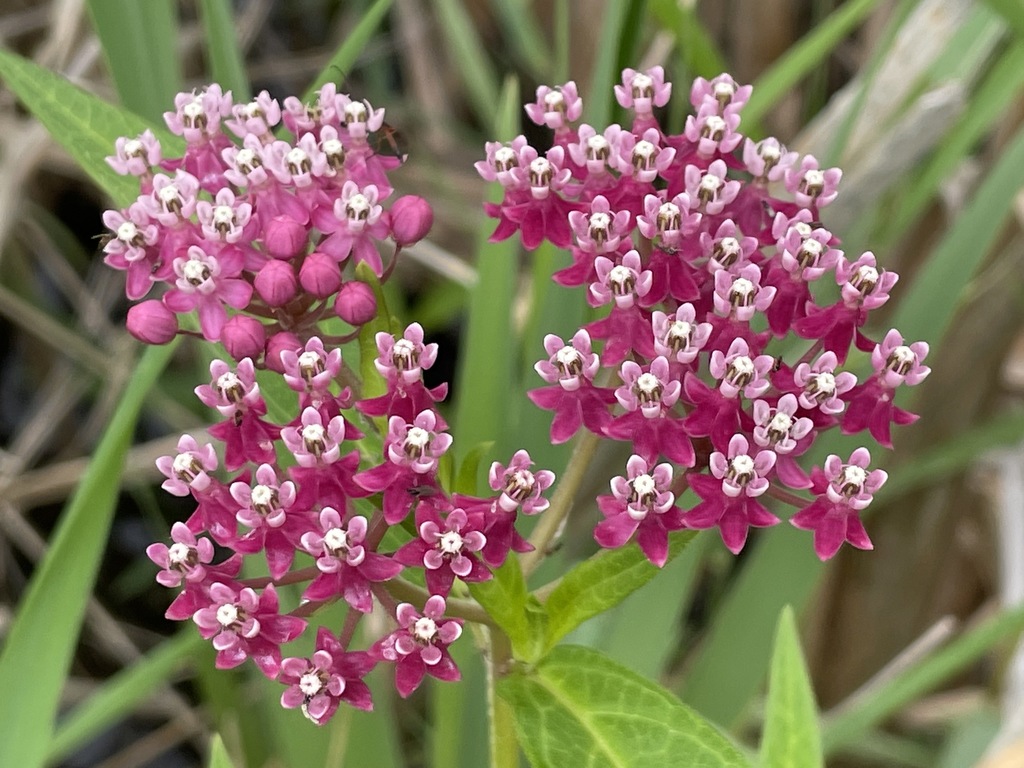
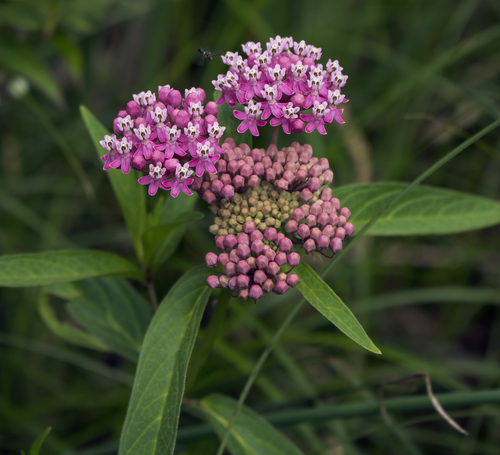
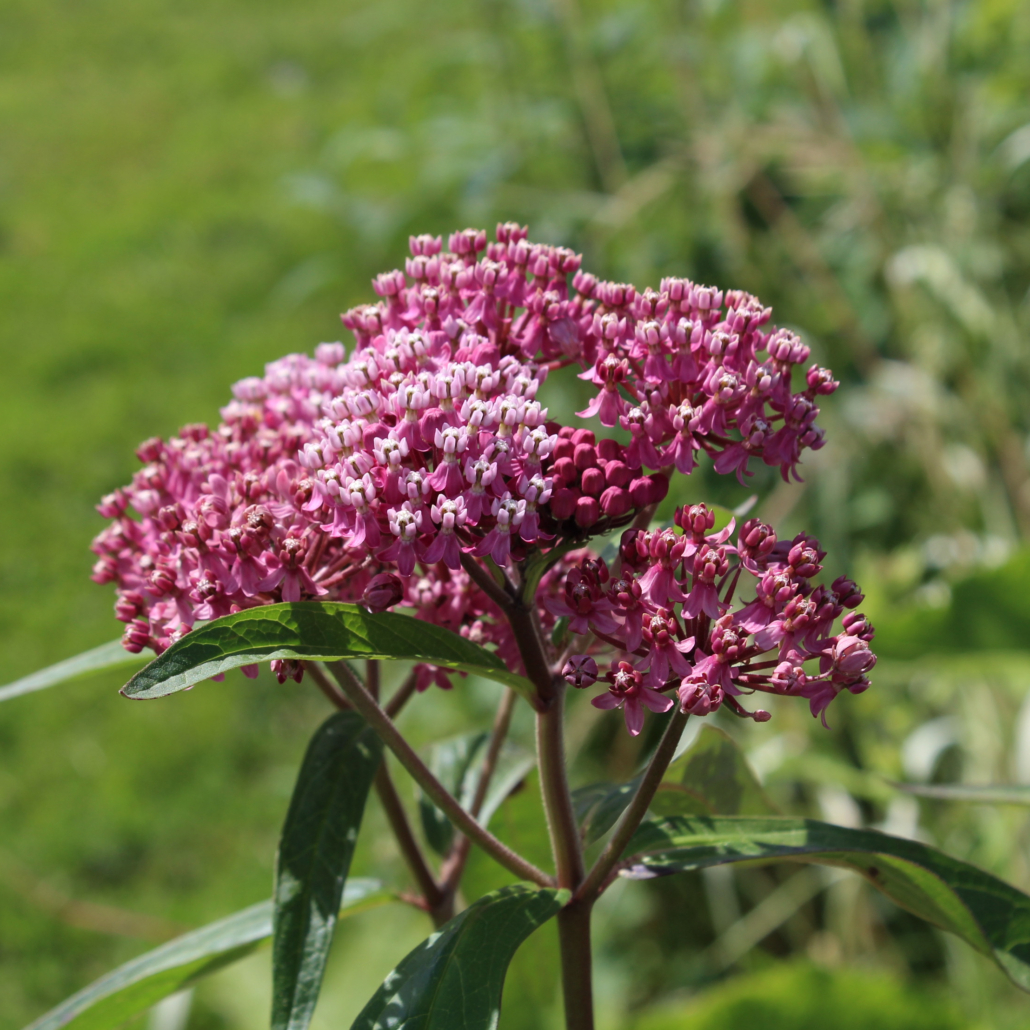
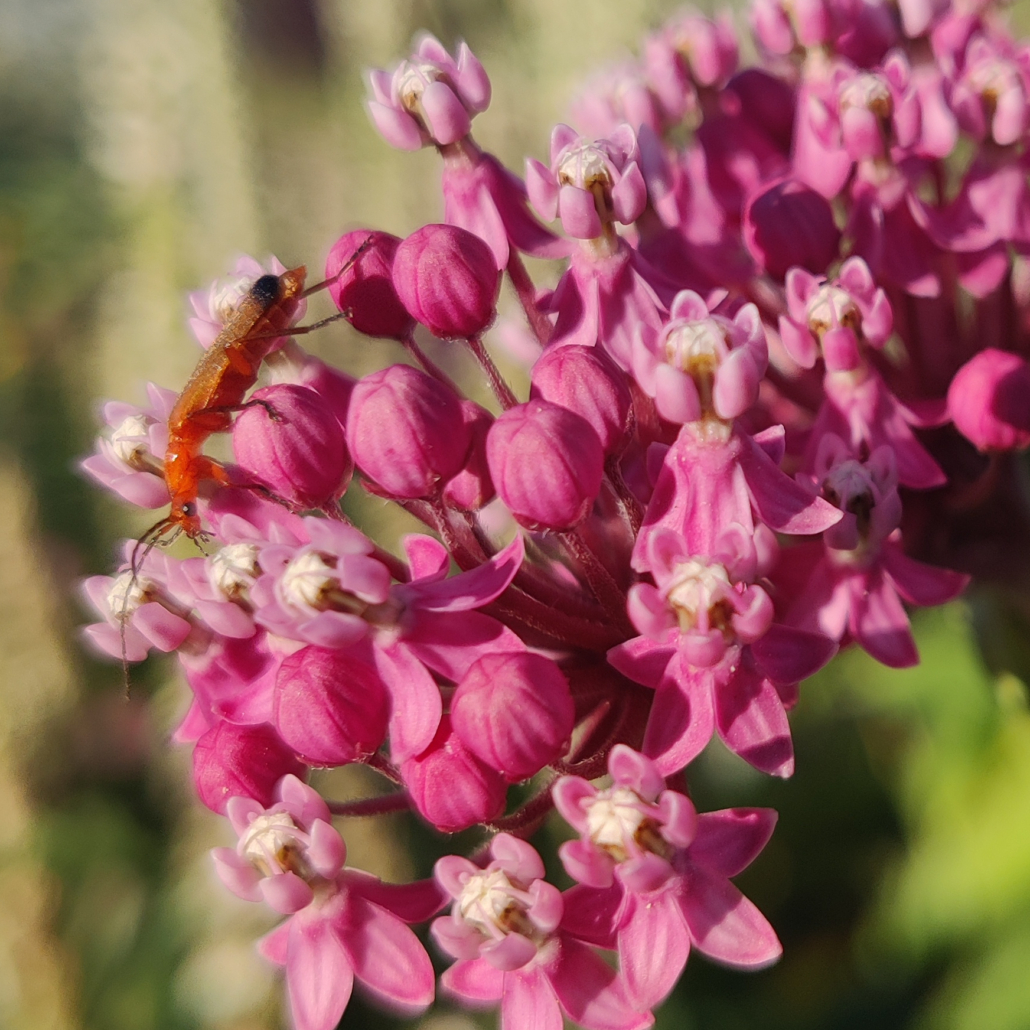
Marsh Milkweed, also commonly known as Swamp Milkweed, Rose Milkweed, Pink Milkweed, Red Milkweed, Silkweed, Water Nerve Root, White Indian Hemp, Swamp Butterfly Weed, and Swamp Silkweed is a native North American herbaceous perennial recognized for its tall stature, smooth and narrow leaves, and its fragrant showy clusters of pink to reddish-pink flowers that bloom in mid-summer. Then in late summer into fall narrow seed pods split open when ripe releasing distinctive silky-plumed seeds that are dispersed by the wind.
As the name suggests, Swamp Milkweed thrives in moist to wet soils, making it ideal for rain gardens, wetlands, bogs, pond edges, floodplain swamps, hydric hammocks, and wet pine flatwoods. Best planted in full sun to light shade in soils with neutral to acidic pH. Looks great as an accent or border in a meadow, native, or pollinator garden. Although it’s native to wet sites, it can adapt to drier sites in moist clay or loam soils. In fact, it’s one of the few ornamentals that actually thrives in mucky clay soils.
Asclepias incarnata is an important nectar source for butterflies, including Pipevine, Spicebush, and Eastern swallowtails, plus native sweat bees, leafcutter bees, and yellow-faced bees that all like to forage on the flowers for pollen and nectar. Also, like all members of the Asclepias genus, Swamp Milkweed is a larval host plant for Monarch, Queen, and Soldier butterflies. The Monarch Butterfly will lay eggs on this plant and the resulting larvae (caterpillars) use the plant leaves as a food source. The leaves contain a milky latex that is hazardous to most animals, but Monarch, Queen and Soldier caterpillars are adapted to feed on them despite the chemical defense.
Seeds germinate easily with heat, water/humidity, and light.
Type: Perennial
Sun exposure: Full sun to light shade
Mature height: 4-5 ft
Mature width: 2-3 ft
Hardiness zones: 3-9


