
Description
Succisa pratensis | White Devil’s-bit Scabious (‘Alba’)
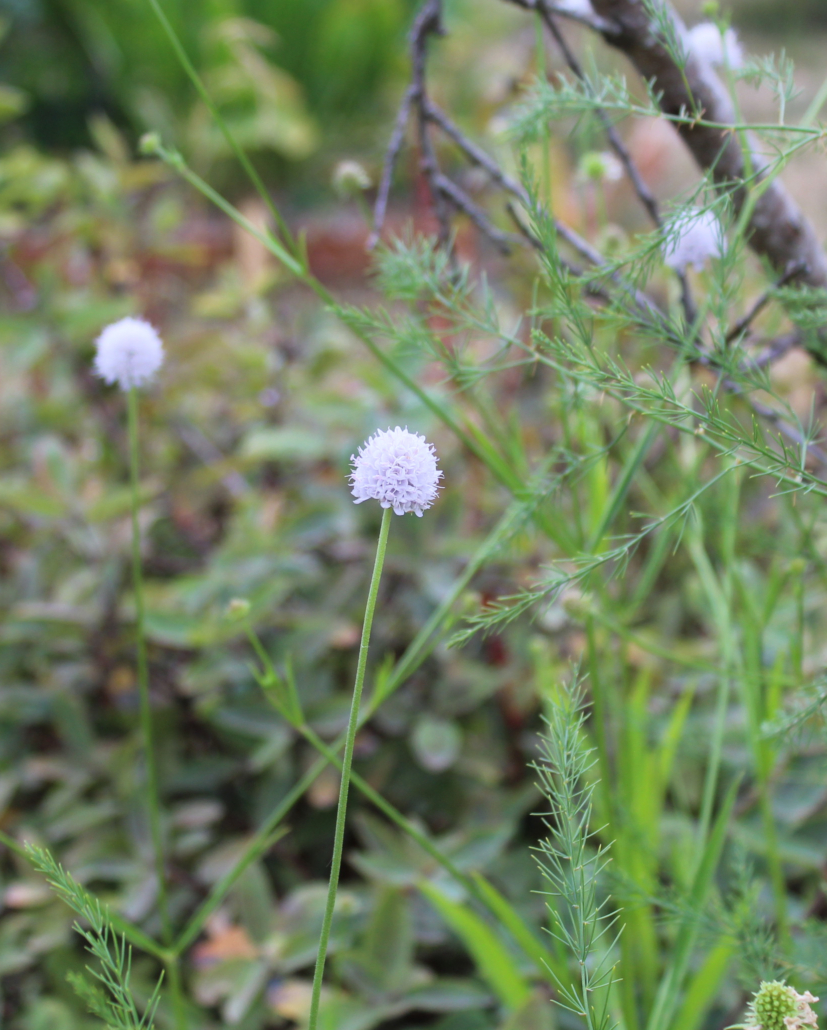
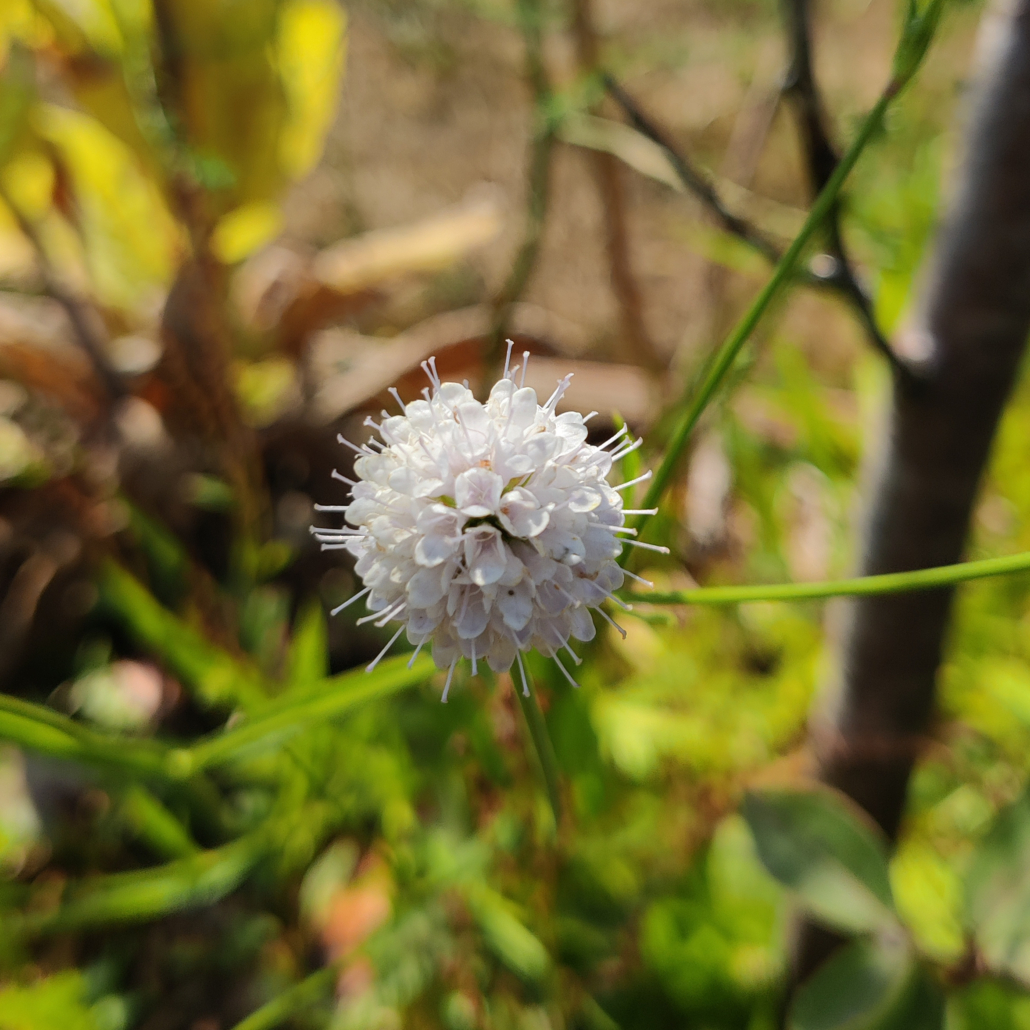
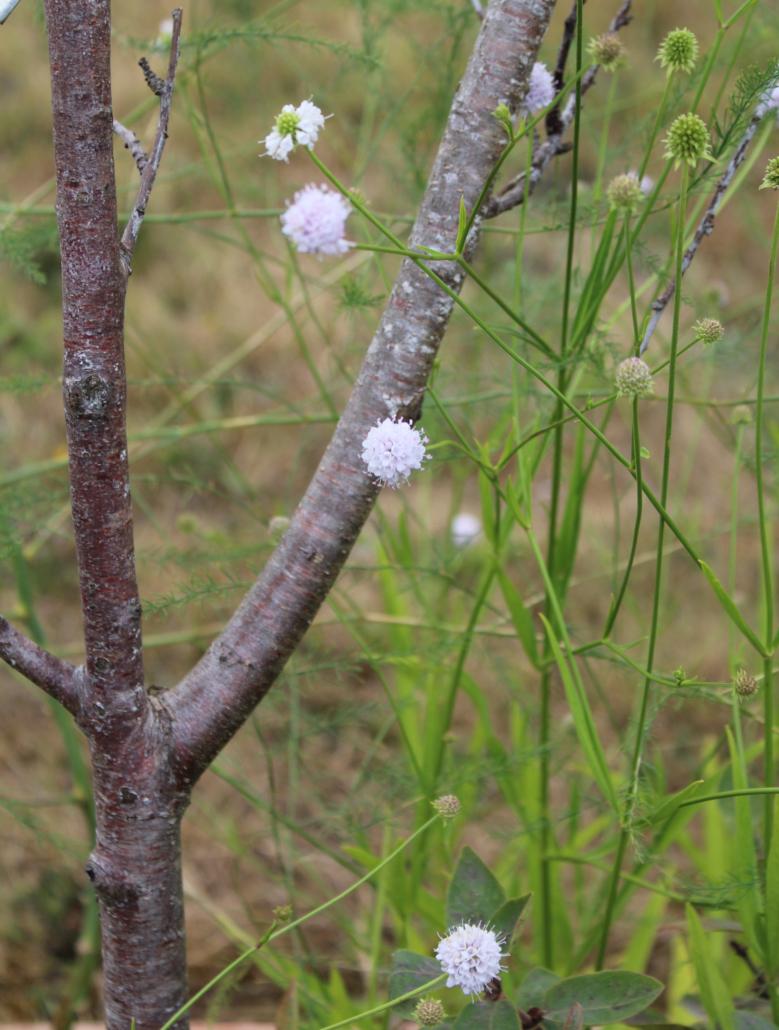
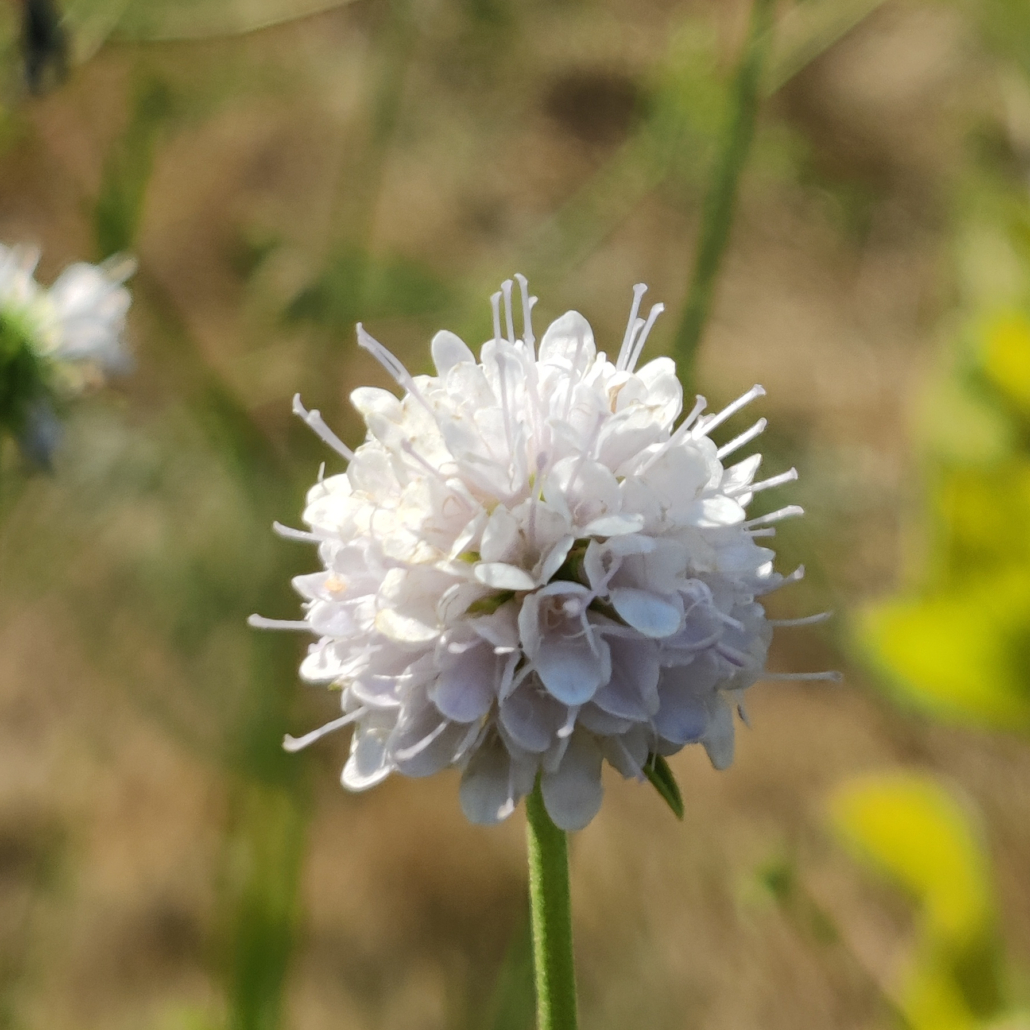
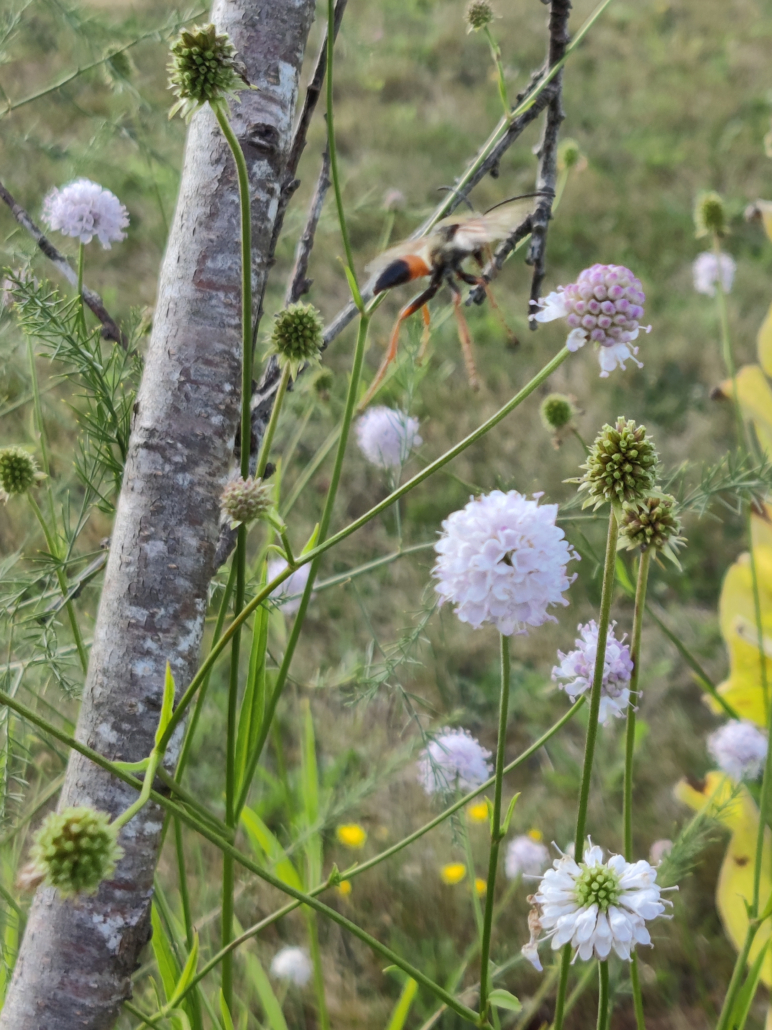
White Devil’s-bit, also called Sheeps-bit, and Blue Buttons is a rare, naturally occurring white-flowered variety of the common lilac-blue wildflower (Succisa pratensis), treasured in wildlife gardens for its late-season nectar for bees and butterflies, with a distinctively truncated root, symbolizing its legendary herbal power against skin ailments like scabies.
The Devils-bit plant possesses an unusually short, vertical rhizome or rootstock that has long, stout roots. The short rootstock is the feature that gives rise to the plant’s English common name- ‘Devil’s-bit Scabious’. In soils where the water table is often near the surface, the rootstock is extremely short (usually only 1-3 cm long) and since it ends abruptly, it looks as if it has been ‘bitten’ off. Since ancient times, the plant rootstock has had a high reputation as an ‘All heal’ herb and the Devil was therefore held responsible for its truncation – hence its common name.
Dark green hairy leaves form a basal rosette from which long slender flowering stems elongate in midsummer, holding delightful, bobbing pincushion-type white flower heads that make a striking display when they finally bloom in August. Contrasts beautifully with other meadow flowers.
Prefers full sun to partial shade in well-drained to damp soil. They are most commonly found growing in damp meadows, heaths, and sunny spots, growing alongside other wildflowers. It’s a crucial late-season nectar source for butterflies, months, and bees.
Sow seeds outdoors in fall or spring in moist soil, covering lightly, or try sowing indoors with cold stratification for a couple weeks or more for earlier and better germination.
Type: Perennial
Sun exposure: Full sun to part shade
Mature height: 2.5-3 ft
Mature width: 18-24 inches
Hardiness zones: 5-9


