Description
Echinocactus texensis (formerly Homalocephela texensis) | Horse Crippler Cactus
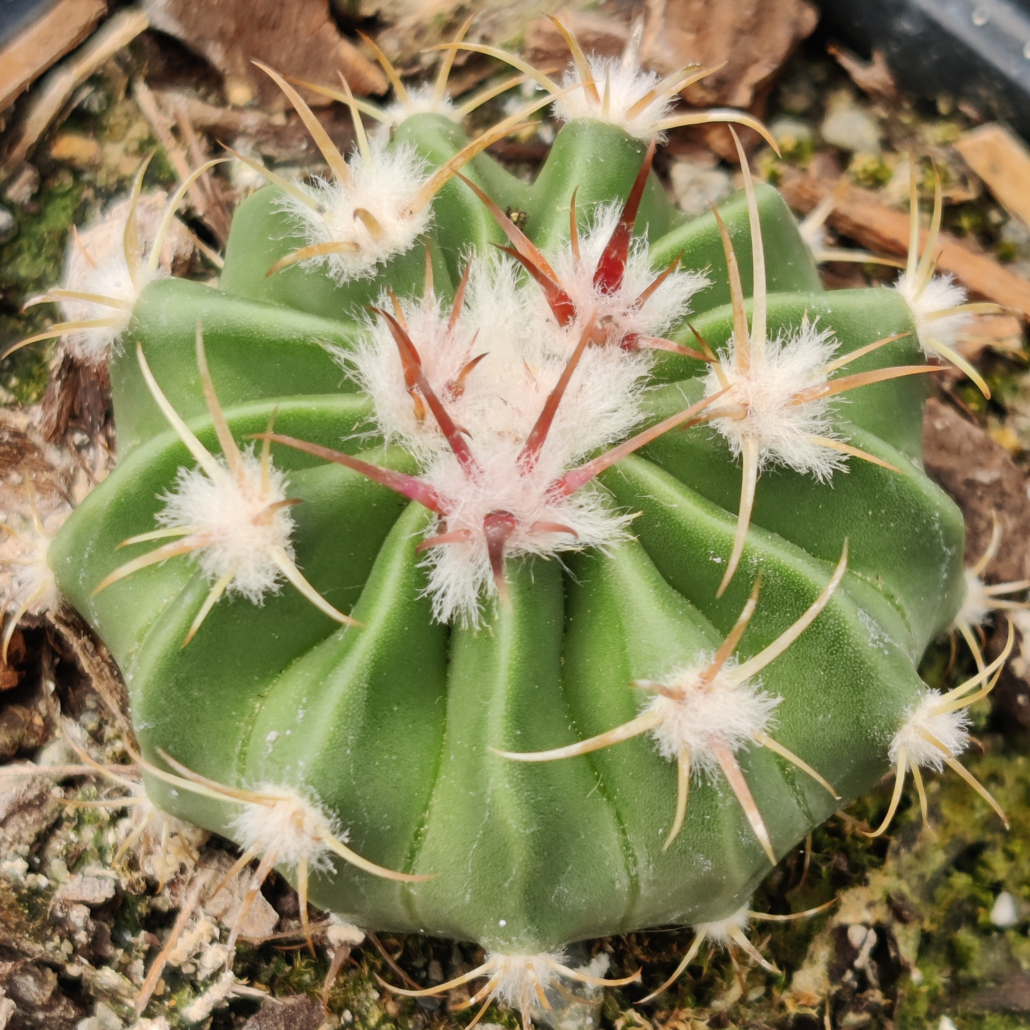
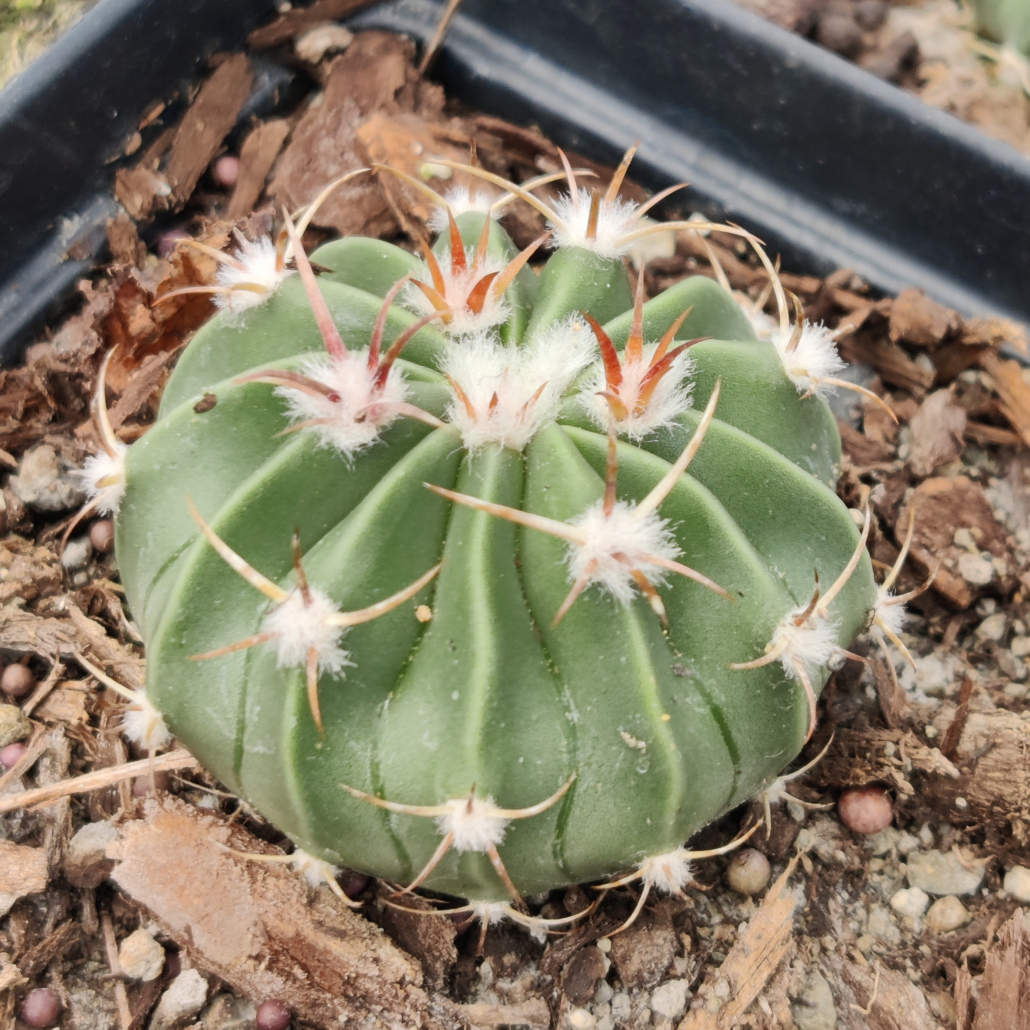
Horse Cripple, also known as Chisos Hedgehog Cactus, Candy Cactus, Devils Pincushion, and Devil’s Head, is an extraordinary flat-topped perennial cactus native to the Southwestern United States and Northern Mexico, named for its flat growth pattern that can surprise animals. Being broader than it is long and typically sitting just 1-2 inches above ground level, it is difficult to see and many horses have been crippled from stepping on it.
Although it’s not very well known and is relatively uncommon in cultivation, it possesses all the characteristics that make a cactus worth growing, including a compact and rounded appearance, robust and colorful spines, beautiful blooms, resistance to drought, it’s tolerance to low winter temperatures, colorful flowers, and exceptionally decorative deep-red berries.
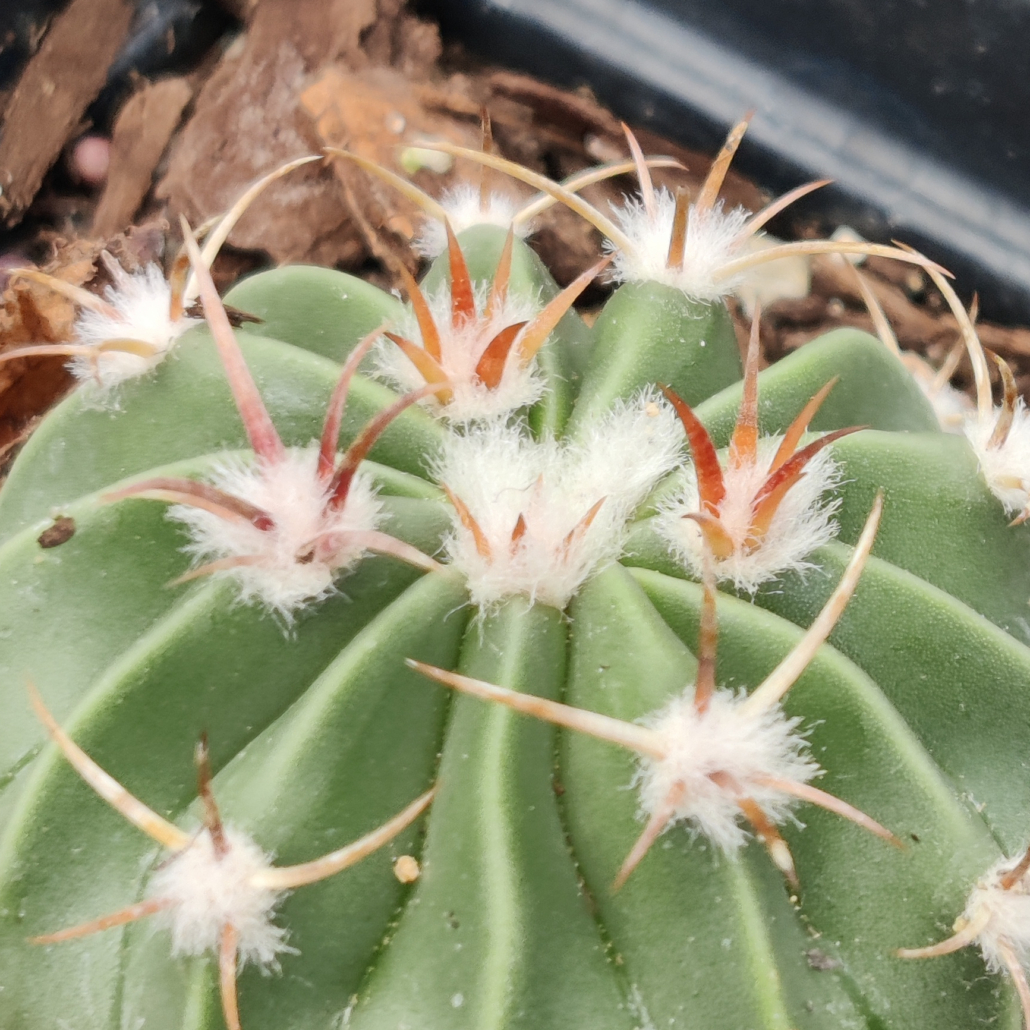
Echinocactus texensis has characteristic spines that grow in clusters of 7-8, with a longer central spine that is longer and stronger than the others and straight to slightly-curved downward. New spines are red, but tend to fade to pink, grayish, and almost white lower down. The inverted bell-shaped flowers are 1-3 inches in size with the outer petals being a salmon-red, while the inner ones are salmon-pink with streaks of red. The flowers open in the morning and close in the evening, attracting bees, birds, butterflies, moths, and small mammals.
Its natural habitat consists of desert, arid scrublands to grasslands, broad clearings in forested areas, plains, valleys, and low hills. This indicates that the soils E. texensis sinks its roots can be highly variable, but are primarily calcareous and sandy. It almost always grows hidden among grasses or in areas where there is some vegetation consisting of bushes and small shrubs, where the substrate is not too poor in organic material.
It is popular in xeriscape and desert gardens due to its small size, ease of growth, colorful flowers, and drought tolerance. During the winter, if kept completely dry from late September, it can tolerate temperatures well below freezing without showing damage. Good winter drainage is very important in wetter climates. E. texensis, like all Echinocactus, need lots of light.
Deer and rabbit resistant due to its spines.
The only way to reproduce this species is by sowing seed, since they do not produce offsets.
Light exposure: Full sun
Mature height: 4-8 inches
Mature width: 8-12 inches
Hardiness zones: 7-10
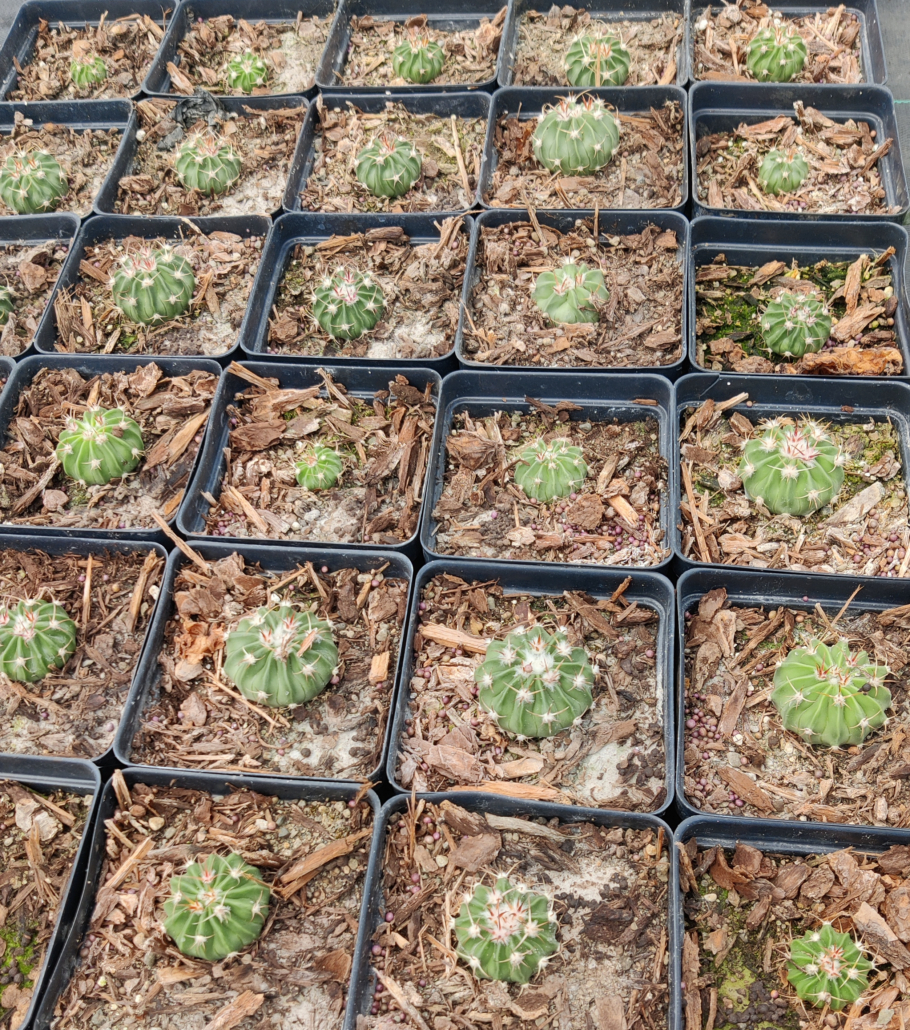
The plant you will receive will be one of the plants in the photos or a similar one.
Please note: We ship plants orders out on Mondays and Tuesdays only.