


Description
Persicaria maculosa (formerly Polygonum persicaria) | Spotted Smartweed
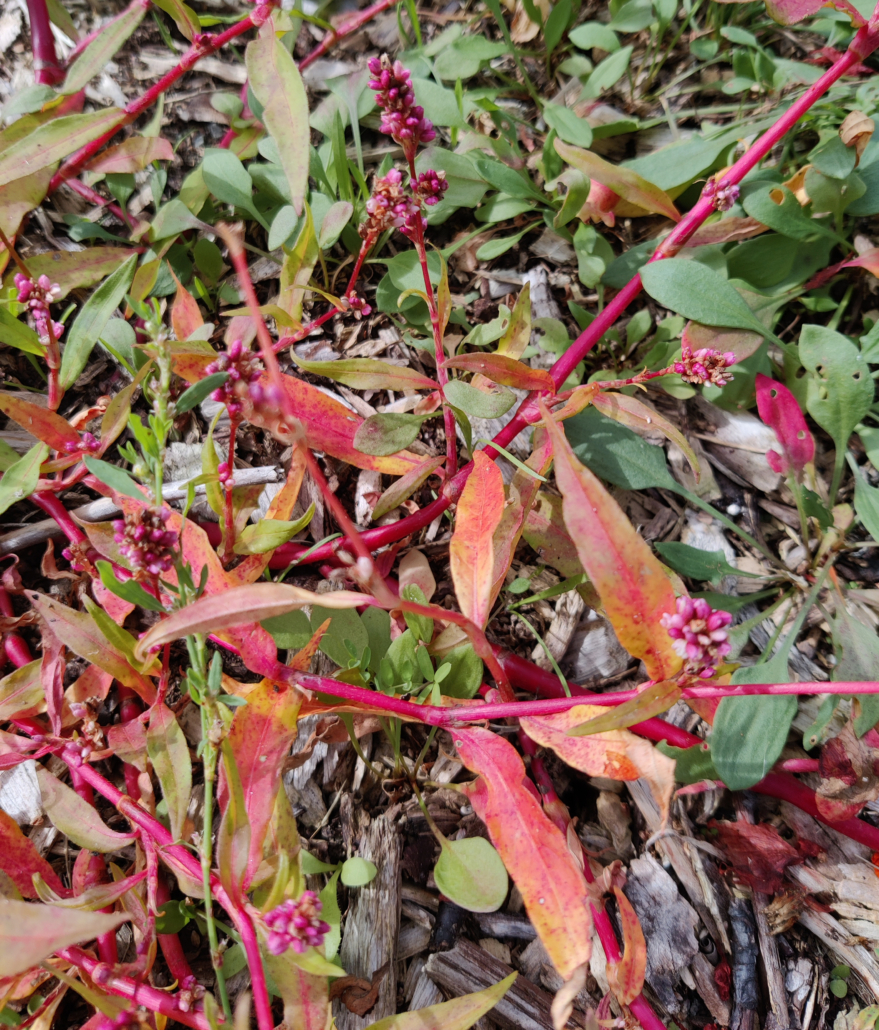
Smartweed, also commonly known as Spotted Lady’s Thumb, Redshank, Jesusplant, Redleg, and Hearts-ease, is a summer annual that’s easily spotted by their abundant small, erect, densely-packed spike-like pink racemes. The stems look resembke miniature bamboo and the leaves are edible and lance-shaped with a dark mark or smudge in the centers that looks like a thumb print. The nectar of the flowers attract Halictid bees, wasps, Syrphid flies, bee-flies, small butterflies, and bumblebees.
These plants are widespread across North America and have become widely established. They can grow explosively in seasonal water basins, receding waterlines of lake shores, along roadsides or any moist, disturbed area. They grow well in fields, gardens, poor soil containing clay, gravel, or sand. It’s extremely similar to and can be difficult to distinguish from Pennsylvania Smartweed (P. pensylvanica), both of which share the same general habitats and have a number of overlapping characteristics.
Distinguishing Lady’s Thumb (Persicaria maculosa) from other smartweeds like Pennsylvania Smartweed (Persicaria pensylvanica) hinges on tiny key differences:
- Leaf Spot: Lady’s Thumb almost always has a distinct, dark, thumbprint-like blotch in the center of its leaves (though it can fade).
- Sheath Bristles (Ocrea): Look at the papery sheath where leaf stalks meet the main stem. Lady’s Thumb has short, bristly hairs (cilia) along the top edge, whereas Pennsylvania Smartweed’s ocrea is smooth.
- Flower Clusters: Lady’s Thumb has shorter, denser, often pink/purple flower spikes, while Pennsylvania Smartweed might have longer, more loosely packed ones.
Seeds germinate easily with heat, humidity, and light.
Type: Annual
Sun exposure: Shade to bright shade
Mature height: 24-30 inches
Mature width: 24-36 inches
Hardiness zones: All zones


